
● Since that date, more than two million SMS messages have also been blocked. The daily average of calls and SMS deactivated has almost doubled since the entry into force of a second package of measures in June
● The Plan also includes measures for the identification of commercial calls, which can now only be made from numbers with geographical prefixes, reserved specifically for commercial communications or from numbers 800 and 900.
● The minister highlighted how these measures protect citizens from a problem that was growing exponentially and recalled that the Telecommunications User Service Office resolves doubts about the rights of users and allows them to file claims.
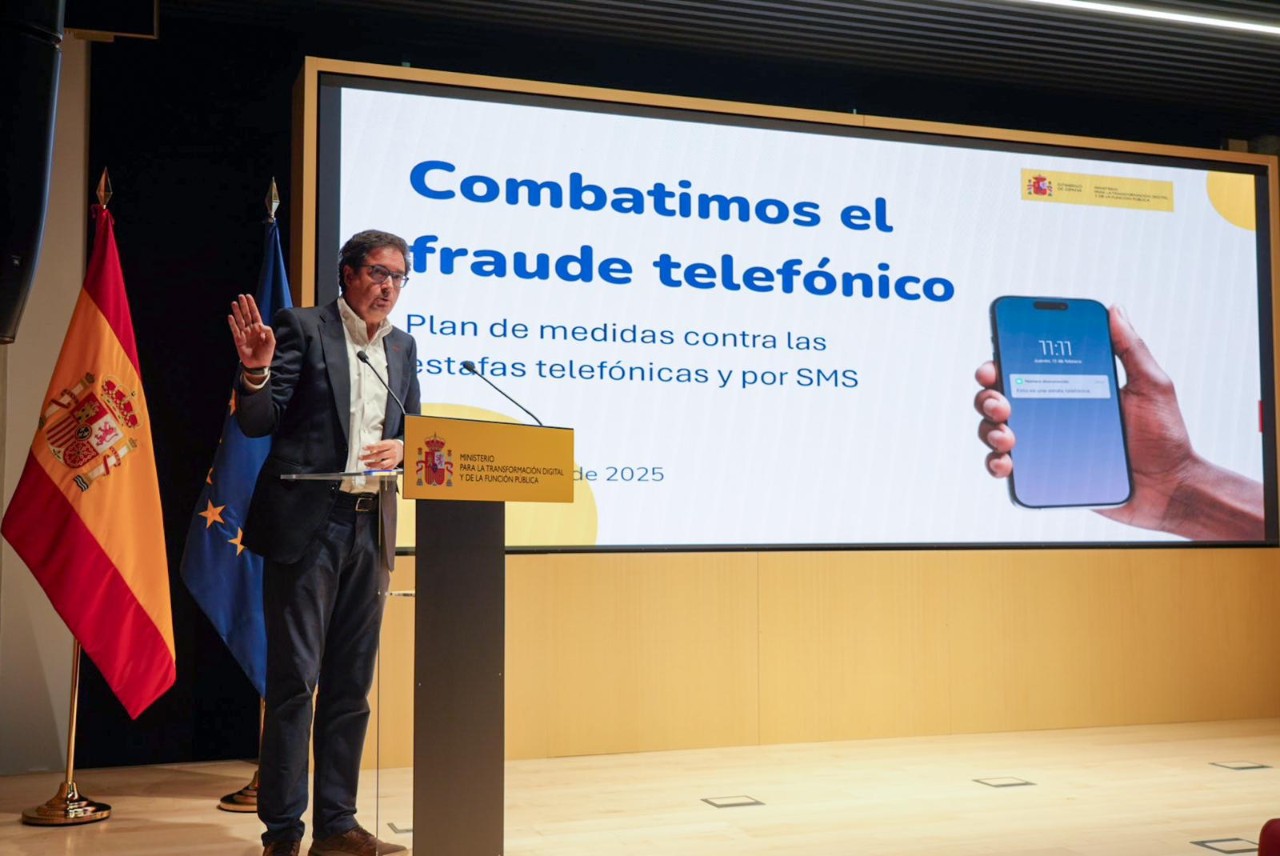
The Minister for Digital Transformation and Public Service, Óscar López, took stock this morning of the Plan against telephone and SMS scams. Since last March 7, when the first measures of the Plan came into force, telecommunications operators have blocked 47,971,400 calls and 2,212,950 SMS.
As the different measures of the Plan against Telephone Scams have come into force, the daily average of blocked calls and SMS has increased.
Thus, in the first period of implementation of the plan (between March 7 and June 7) the average number of blocked calls per day was 235,600 and 10,000 SMS, while in June and July the average number of blocked daily calls was 434,915 and 18,666 SMS.
“We have taken measures to protect citizens from phishing scams that are committed through calls or SMS messages in which, among other fraudulent practices, the user is encouraged to give their data to the scammer believing that it is an entity or institution. It was a problem that was growing exponentially and causing significant economic damage,” the minister explained.
The Government Plan came into effect on March 7. From that date, operators have the obligation to block numbers that are not attributed to any user or service, for example, numbers starting with 3 or 4.
Subsequently, since June 7, operators are also blocking calls and SMS that are of international origin (except those numbers that are in roaming), but they pretend to have originated in a Spanish number to deceive the citizen, one of the most common practices in telephone fraud attempts.
“Once again, these data show the extent to which these measures work. These are massive attacks of fraudulent calls that are carried out from automatic applications and that can no longer reach the citizen”, the minister stressed.
Commercial calls
In addition, the Plan prohibits commercial calls from mobile numbers, since a significant part of the scams occurred when the citizen received calls from national mobiles that are not kept in his diary, so he cannot identify the caller.
Commercial calls can now only be made from numbers with geographical prefixes, reserved specifically for commercial communications or from numbers 800 and 900, which are now allowed to make calls, and not just receive them.
The minister recalled that the Office of Telecommunications User Support It resolves doubts about the rights of users and allows claims to be filed, for example, in the event that a citizen continues to receive commercial calls from mobile numbering.
Database with alphanumeric codes
The Plan against Telephone and SMS Scams has a final measure that, due to its technical complexity, will enter into force 15 months after its entry into force, in June 2026.
It is about the creation of an official database with alphanumeric codes used by companies and public administrations as identifiers in SMS.
This database, which will be managed by the National Commission of Markets and Competition (CNMC), will allow the registration and verification of these identifiers. This will guarantee the authenticity of communications, protect the identity of legitimate entities, and facilitate the detection and blocking of attempts to supplant.