
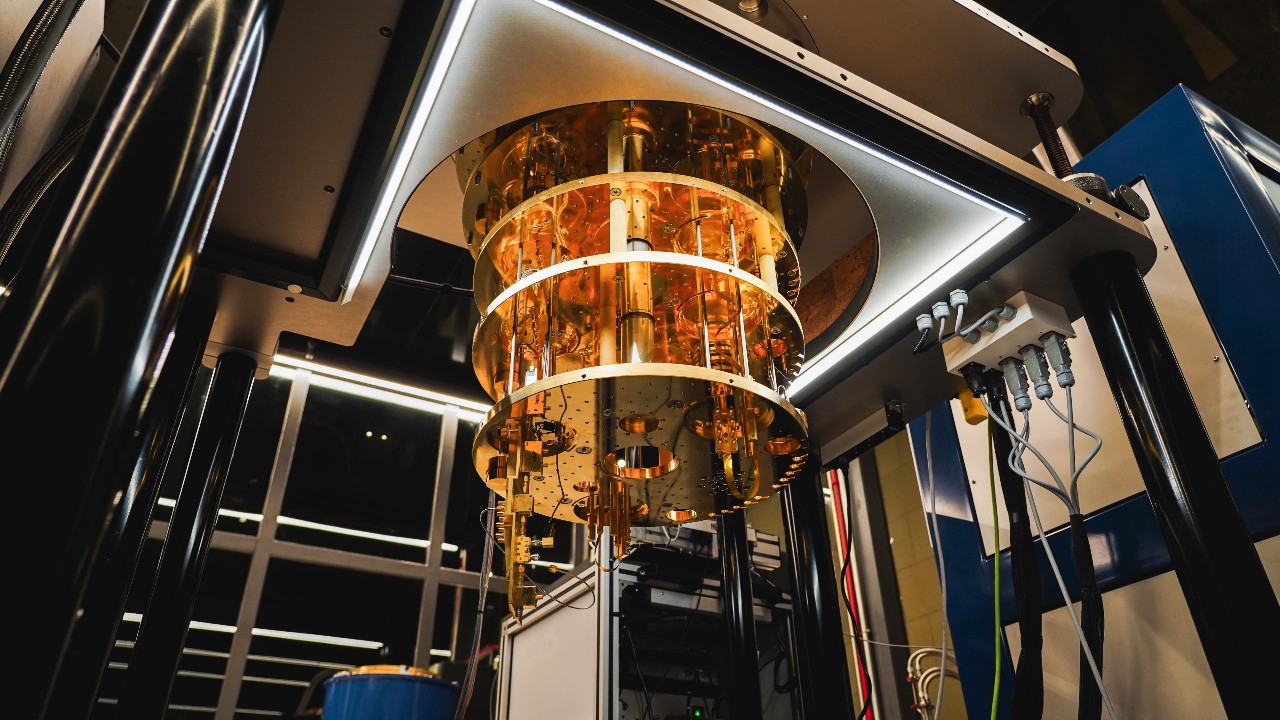
· The system, which has completed its evolution with a new processor of 35 cubits, is available to the research, public and business community, through the Spanish Supercomputing Network
· This was announced today by the Secretary of State for Digitalization and Artificial Intelligence at the II Europa Press Technology Conference, highlighting that With the Quantum Technologies Strategy of Spain “we strengthen digital sovereignty, boost competitiveness and guarantee responsible development with security guarantees”
Within the framework of the Quantum Technologies Strategy of Spain, the Government of Spain takes a step forward in technological sovereignty with the expansion of the capacity of the quantum computer that the Quantum Spain program promotes in the Barcelona Supercomputing Center–National Center of Supercomputing (BSC-CNS). With the incorporation of a new chip of 35 cubits, this system, developed with 100% European technology and under an open access model, positions Spain as a reference in Europe in the deployment of quantum systems of these characteristics.
Since its launch, the system has undergone a progressive evolution thanks to the incorporation of different processors, going from an initial capacity of 5 cubits to reach its current configuration.
This advance constitutes the final milestone of Quantum Spain, an initiative coordinated by the BSC-CNS and promoted, with an investment of 22 million euros, by the Ministry for Digital Transformation and Public Service, through the Secretary of State for Digitalization and Artificial Intelligence (SEDIA). The project, which began in 2022, is funded by European funds from the Recovery, Transformation and Resilience Plan and is part of the Spain Digital 2026 program, as well as the National Artificial Intelligence Strategy.
Quantum Spain is a collaborative effort involving 27 leading institutions in research and supercomputing in Spain, including 14 nodes of the Spanish Supercomputing Network (RES) and other institutions such as the CSIC, ICFO and universities such as the University of Barcelona, the Autonomous University of Madrid and the Polytechnic University of Valencia, among many others.
The Secretary of State for Digitalization and Artificial Intelligence, María González Veracruz, who announced the expansion of this infrastructure at the II Europa Press Technology Conference, stressed that “with the National Strategy of Quantum Technologies, the Government of Spain has equipped itself with a key instrument to anticipate the quantum technological revolution, with the aim of strengthening digital sovereignty, boosting competitiveness and ensuring responsible development with security guarantees. Quantum Spain is a clear example of how well-managed public investment accelerates innovation and positions Spain on the technological frontier. Today we are not only taking a step in quantum computing, but in a country model that is committed to knowledge, collaboration and open access as engines of progress,” he said.
Available to the scientific community, companies and public bodies
“La incorporación de este procesador de 35 cúbits completa la hoja de ruta tecnológica que nos habíamos marcado. Quantum Spain aimed to demonstrate the technological maturity of the field and move from experimental quantum computers to the deployment of a machine available for real use. But the most important thing is that all this development keeps its character open: any research group or company can access real quantum hardware, integrated in a supercomputer such as IllaNostrum 5, something still exceptional in Europe”, says Alba Cervera, BSC researcher and coordinator of Quantum Spain.
The scientific community, companies and public bodies can request its use through competitive calls through the Spanish Supercomputing Network (RES) and execute their algorithms on real quantum hardware, allowing them to validate results and develop new applications in a real environment.
To date, RES, as a Distributed Unique Scientific and Technical Infrastructure (ICTS), has granted access to its quantum resources to a total of 45 projects. Together, these have accumulated close to 4,000 hours of computing and have led to the development of several scientific articles, which demonstrates the growing interest of the scientific and technological community for this type of infrastructure and its application in real environments.
The system has been installed and implemented by the Spanish UTE Qilimanjaro-GMV. Based on superconducting technology, it is integrated into the PaulNostrum 5 supercomputer, allowing you to explore new forms of computing that combine classical and quantum capabilities.
“After years of hard work and preparation, we have produced a European quantum computing system, which is part of a Spanish ICTS and one of the most complete computing systems in the world. Now, with the stable system, our job is to support the users of this infrastructure”, comments Sergi Girona, Director of Operations of the BSC.
Quantum computing promises to revolutionize multiple disciplines by facilitating the analysis of phenomena on the atomic scale. Its possible uses range from chemistry — where it could boost the creation of new materials and drugs — to solving complex challenges in areas such as logistics or finance. Likewise, its ability to improve process efficiency positions it as a strategic tool, especially by integrating with artificial intelligence to design more advanced machine learning algorithms. In terms of security, it could redefine cryptography, posing both unprecedented challenges and safer solutions.
Currently, the quantum capabilities of the BSC are being strengthened with the installation of a new analog quantum computer, which is part of one of the quantum computing nodes of the EuroHPC Joint Undertaking and is 50% funded by the Secretary of State for Digitalization and Artificial Intelligence with European funds from the Recovery, Transformation and Resilience Plan. This system will expand and enhance the research capabilities of the center and will also be available to users.