
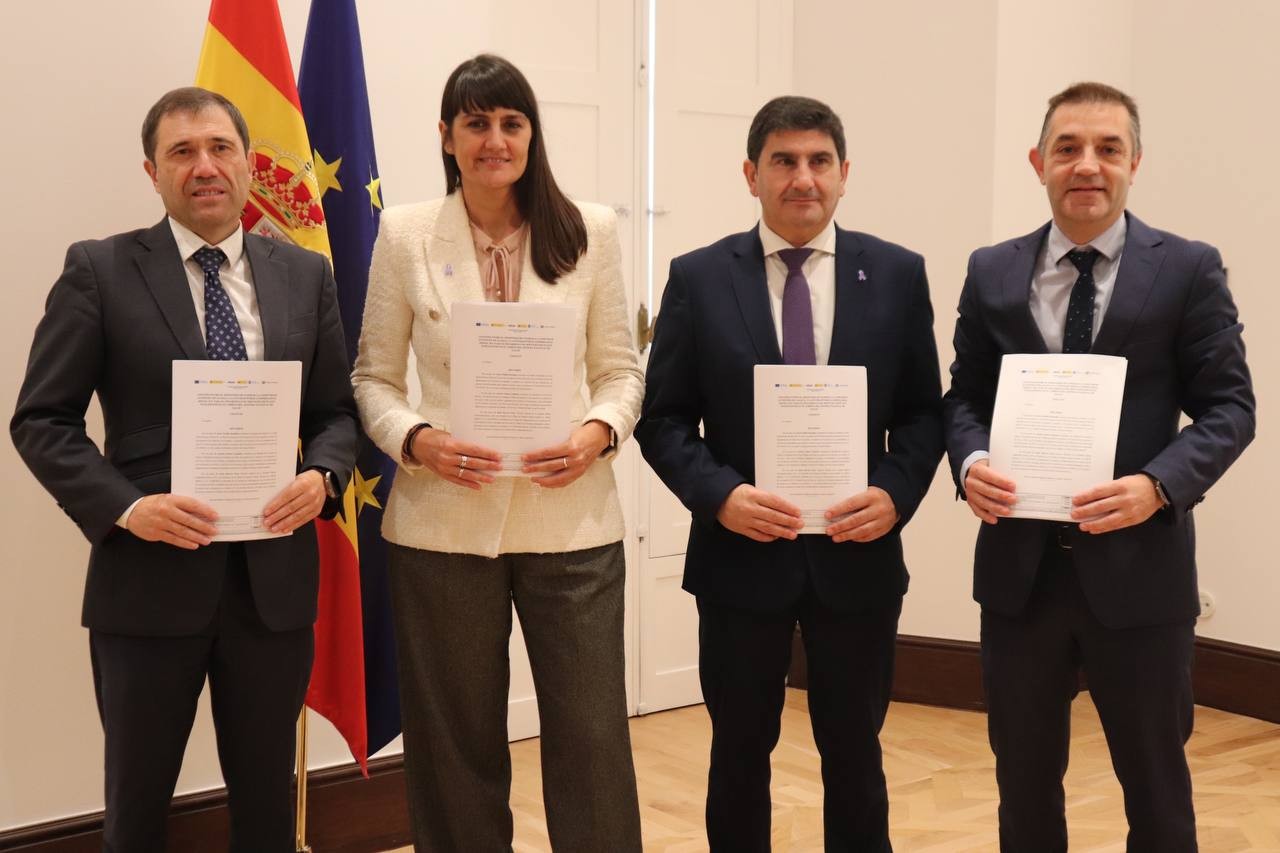
· Red.es will manage this initiative, financed with Feder funds and by the Ministry of Health, by which the autonomous community will have 9.3 million euros extra for the modernization of Galician health
· Among the main lines of action, there is the definition of cases of use of Artificial Intelligence in the health sector
· The initiative, to which Catalonia has already joined, will provide a total of 223 million euros extra to incorporate AI into healthcare in the autonomous communities
The Ministry for Digital Transformation and the Public Service - through the public entity Red.es - and the Ministry of Health continue in the autonomous community of Galicia the deployment of the program for the development of Intelligent Digital Services in the National Health System. The initiative, which has also been joined by Catalonia, is part of the Multiregional Operational Programme of Spain (POPE) financed with FEDER 2021-2027 funds, endowed with a total budget of 223 million euros extra for the National Health System.
The president of Red.es and Secretary of State for Digitization and Artificial Intelligence, María González Veracruz, held today a kick-off meeting of the program at the headquarters of the Spanish Agency for Supervision of Artificial Intelligence (AESIA) in A Coruña, together with the General Secretary of Digital Health, Information and Innovation of the National Health System of the Ministry of Health, Juan Fernando Muñoz; and with the General Deputy Director of Information Systems and Technologies of the Ministry of Health of Xunigta de Galicia, No.
“The effort being made by the Spanish Government to digitize health means improving the lives of citizens and our public health system. We will be able, thanks to artificial intelligence and digitalization, to predict diseases, to monitor chronic diseases… that is, a series of innovations to which we give a new impulse together with the autonomous communities to continue positioning ourselves in Europe as one of the referents in digital health”, said González Veracruz before the meeting that begins the agreement signed between Red.es, the Ministry of Health and the Xunta de Galicia.
For his part, the Secretary General of Digital Health, Information and Innovation of the National Health System of the Ministry of Health, Juan Fernando Muñoz, highlighted the approval on November 12 by the Interterritorial Council of the SNS of the Artificial Intelligence Strategy in the SNS, to promote the ethical and responsible use of AI in the SNS, supporting professionals and strengthening the equity of the system and improving the welfare of citizens, as well as the effort of the Ministry of Health to cover the national cofinancing associated with FEDER funds for all autonomous communities.
The Intelligent Digital Services in the National Health System program is financed by Red.es (entity attached to the Ministry for Digital Transformation and Public Service) with Feder funds and by the Ministry of Health. The autonomous communities can access this financing through a collaboration agreement with the Government of Spain. Once the agreement has been signed and the actions started, the administration of each autonomous community must justify the actions carried out within the framework of the agreement.
Strategic lines for the digital impulse of the National Health System
The agreements will have a duration of four years and among the main lines of action, it is contemplated the implementation of remote monitoring programs of chronic pathologies, the use of advanced health analytics, and the development of use cases based on Artificial Intelligence, focused on the help of diagnosis and early detection, as well as in the support of health professionals, especially in primary care, among other applications.
Use cases will include those intended for the diagnosis and monitoring of rare diseases. And once developed, they will be made available to all health administrations.
In addition, it seeks to facilitate the implementation of telecuidados programs, promoting a more personalized, accessible and sustainable care model.
These efforts are aimed at de-bureaucratizing health care, freeing time for professionals and ensuring equity in the provision of medical services in all Autonomous Communities. In short, the aim is to improve the quality of care by optimizing the resources of the National Health System (SNS).