
· These actions are integrated into the National Digital Skills Plan, with an investment of 3.75 billion euros, which has already promoted the training of more than two million people
· “We are focused on digital training in all areas, with the objective that digitalization reaches all people, no matter where they live or what their situation is, because equal opportunities in this technological era depends on no one being left behind,” he said.
· The European report of the Digital Decade 2030 highlights that Spain already has 66.18% of the population trained in basic digital skills, well above the 55.56% of European average
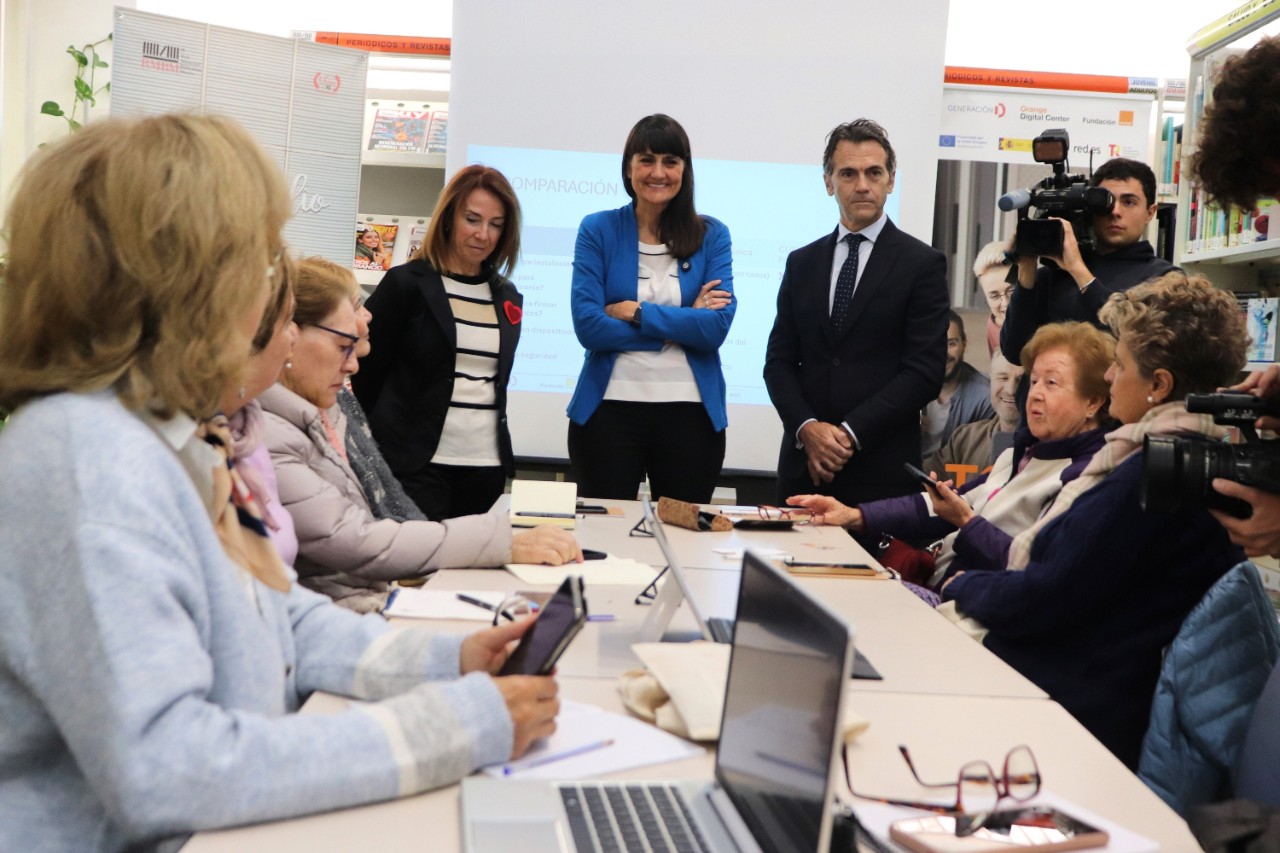
The Secretary of State for Digitalization and Artificial Intelligence, María González Veracruz, visited today in Murcia one of the courses of the National Digital Skills Plan aimed at training vulnerable groups in basic digital skills that is being carried out by the Orange Foundation.
González Veracruz stressed that “the Government of Spain is carrying out the largest investment in digital skills in its history through the National Digital Skills Plan, an initiative endowed with 3.75 billion euros that has already trained more than 2 million people who have deepened the knowledge necessary to adapt to the technological, social and labor challenges of the 21st century. Right now, there are hundreds of thousands of people forming all over Spain.”
In particular, the plan promoted by the Ministry for Digital Transformation and the Public Service is training about 699,753 citizens in transversal digital skills, of which 475,012, 67.88%, belong to disadvantaged groups (people with disabilities, at risk of poverty or with a minimum income of insertion, people over 60 years of age, population without digital skills), thanks to the training program of the third sector of Red.es.
In the case of the course visited, sessions are held in the Municipal Library San Basilio de Murcia for people over 60 years old, especially women, with groups between 10 and 16 people without basic digital skills. They perform tasks such as discovering social networks, how to make telematic administrative procedures, mobile purchases, or also offering mechanisms to identify hoaxes, fake news and attempted scams and identity theft.
In this sense, the European report of the Digital Decade 2030 places Spain well above the European average (55.56%) in basic digital skills, which already account for 66.18% of the Spanish population. Progress is even greater among young people (more than 83%), which has been achieved by reducing territorial and gender gaps.