· He shared with local entities and companies in the technology sector the initiatives of the Ministry for Digital Transformation and the Public Service, which has already allocated 200 million euros to measures to support the digitization of municipalities throughout Spain
· In Catalonia, it has supported projects in cities such as Salou, Lloret de Mar, Terrassa and L´Hospitalet de Llobregat to promote tourist destinations or smart buildings.
· In addition, Mataró is one of the 12 beneficiaries of the EDINT program, which the Ministry promotes together with the FEMP with an investment of 13 million euros, for the promotion of the intelligent use of data in municipalities
· Next, RedCyTI grants will be called, with an investment of 87 million euros in order to improve the technological infrastructures of the municipalities
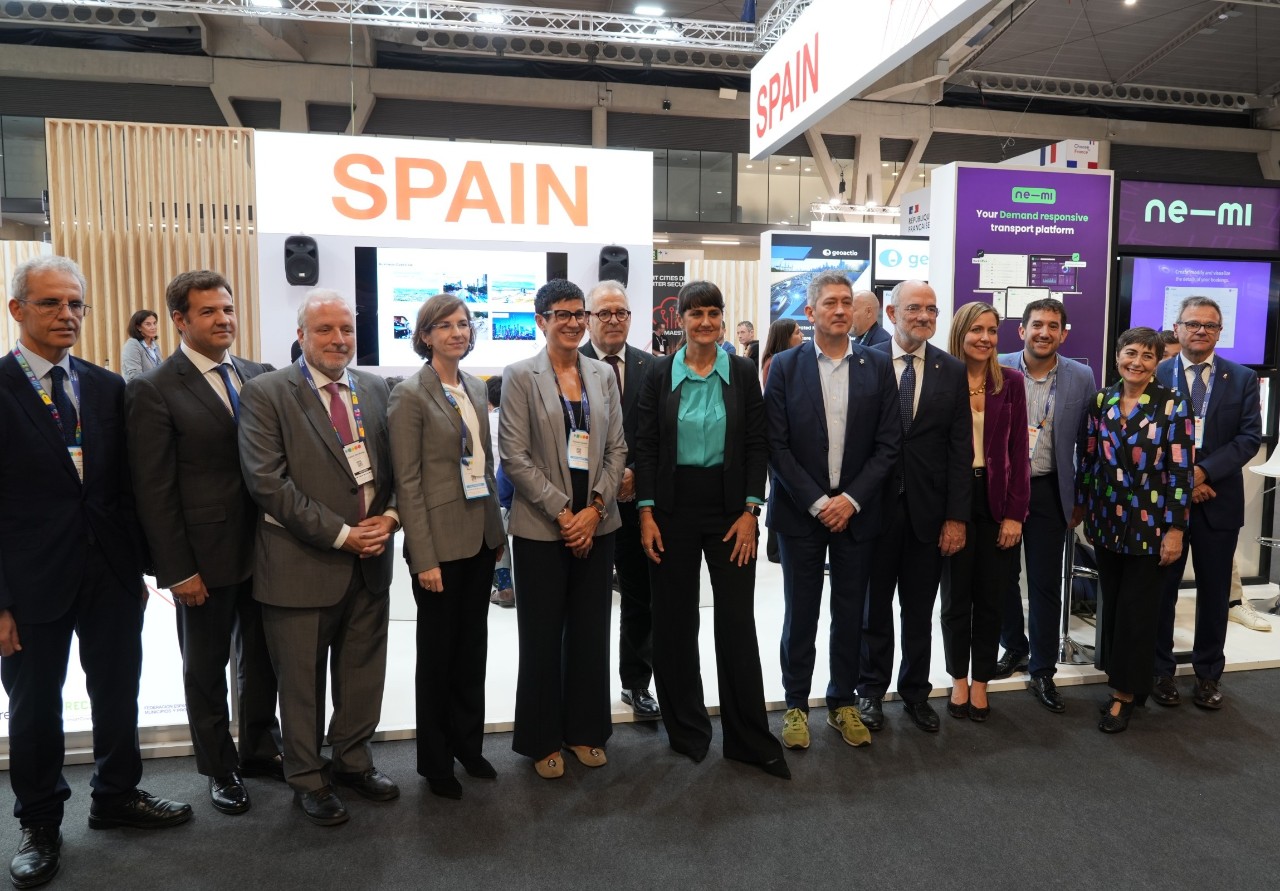
The Secretary of State for Digitalization and Artificial Intelligence, María González Veracruz, participated yesterday in the inauguration of the Smart City Expo World Congress, which is held from November 4 to 6 in Barcelona. During the tour, he shared with representatives of local entities and companies in the technology sector some of the initiatives promoted throughout Spain by the Ministry for Digital Transformation and Public Service, which has already allocated 200 million euros to smart cities, benefiting 59 local initiatives.
Through the Secretary of State for Digital Transformation (SEDIA), the Government of Spain continues to promote the digitization of cities with new measures such as the RedCyTI 2025 aid that, endowed with 87 million euros, will be convened soon. This measure aims to improve the technological infrastructures of the municipalities in order to boost productivity, employment and offer advanced services to their citizens.
In parallel, the EDINT program is under way with the Spanish Federation of Municipalities and Provinces (FEMP), presented this Monday by Minister Óscar López at the ministerial headquarters, to which SEDIA has contributed 13 million euros, for 12 initiatives of local entities aimed at promoting the intelligent use of data: Valencia, Alcoi, A Coruña, Málaga, Jaén, Logroño, Badajoz, Fuenlabrada, Madrid, Jerez, Santander and, in Catalonia, Mataró.
In Catalonia, SEDIA has supported various initiatives aimed at promoting ‘smart cities’. In particular, it has invested 6.2 million euros in two smart tourism destination projects: ‘Lloret, intelligent destination’ of the City of Lloret de Mar and ‘Salou Smart Turistic’ of the City of Salou. It has also contributed 4.98 million euros to two smart building projects, ‘PIEL´H’ of the City of L’Hospitalet de Llobregat and ‘Smart Building Terrassa’ of the City of Terrassa.
The Government of Spain participates in this fair and congress, which brings together in the Fira 1,100 exhibitors, 25,000 visitors and more than 800 cities represented, with a pavilion promoted by the Ministry for Digital Transformation and Public Function, through Red.es, together with ICEX and RECI. In this space, the Secretary of State has held a meeting today with some of the exhibitors, coming from different autonomous communities, who develop advanced solutions for mobility, efficient management of urban resources, environmental monitoring or accessible signage.