
The Secretary of State for Telecommunications and Digital Infrastructures presents to the international community the agenda ‘Digital Spain’ as a model to close the connectivity gaps
18/09/2022
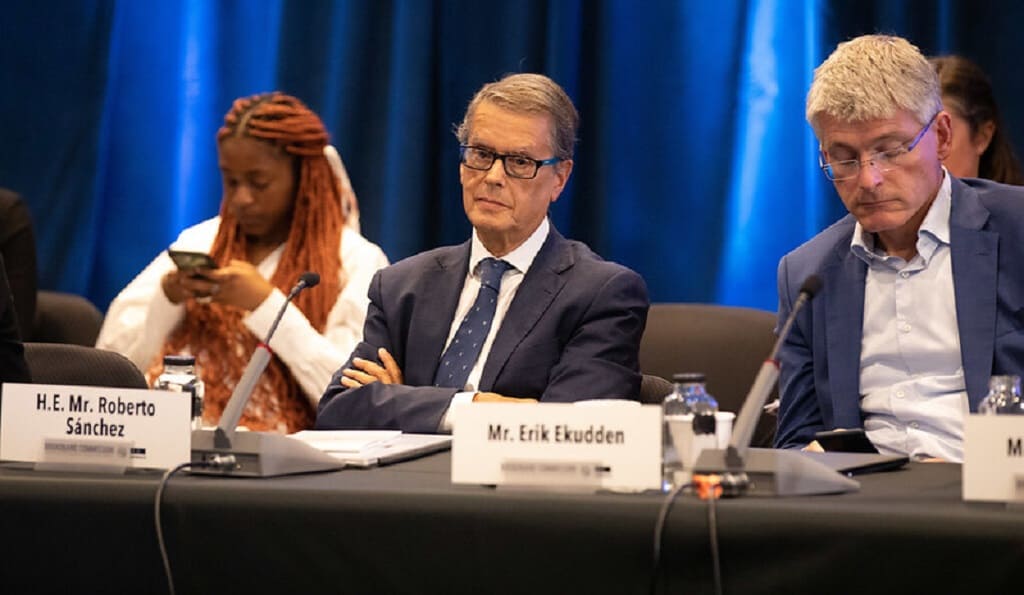
The Secretary of State for Telecommunications and Digital Infrastructures, Roberto Sánchez, participated yesterday in the autumn plenary session of the Broadband Commission for Sustainable Development of the United Nations and highlighted the programs implemented in Spain for the extension of high-capacity networks, as well as others aimed at closing the digital gaps of affordability and training.
The Secretary of State for Telecommunications and Digital Infrastructures, Roberto Sánchez, participated yesterday in the autumn plenary session of the Broadband Commission for Sustainable Development of the United Nations and highlighted the programs implemented in Spain for the extension of high-capacity networks, as well as others aimed at closing the digital gaps of affordability and training.
Since the launch of these initiatives, the Government has granted grants of 872 million euros, -655 million since 2018-, which have mobilized investments totalling 1,603 million euros to extend broadband. The national coverage rate of at least 100 Mbps was 88% in June 2021 and 94% in 30 Mbps.
On the other hand, the connectivity gap between rural and urban areas was reduced to 20 points. Once the broadband extension programs currently underway, included in ‘España Digital’, have been completed, the gap will be below 10 points. The goal is for it to disappear by 2025, once 100 per 100 of the population has access to broadband.
An objective aligned with the agenda of the United Nations and the Broadband Commission, which focuses its actions on the mobilization of the public and private sector to accelerate the access and use of high-capacity networks in the world. A third of the world’s population, around 2.7 billion people currently lack internet access, according to the International Telecommunication Union (ITU).
The role of education
During the meeting, at UNICEF headquarters in New York, Commission members called for the universalization of affordable and inclusive connectivity for the digital transformation of education. They also stressed the need for cooperation between the public and private sectors for the development of strategies to improve digital skills.
On the margins of the Broadband Commission, the Secretary of State noted the importance of implementing programs not only to extend connectivity but to close the affordability gap and foster digital skills. “Networks are the gateway to the digital society and training is the key that opens it. We must promote digital literacy and empower workers to achieve a sustainable digital future,” he said.
In this regard, he highlighted the value of the connectivity vouchers for vulnerable groups implemented in 2021 by the Government and being implemented by the autonomous communities, which will help 125,000 people to have quality access, as well as the Digital Kit vouchers for the digital transformation of vulnerable groups. SMEs Spanish.
This issue was also addressed by the members of the Commission during the session. “Innovation does not come only from the big industry. Startups And entrepreneurs make vital contributions in this area. We must continue to work to ensure greater participation by women. SMEsand micro-SMEs in the work of ITUHoulin Zhao, Secretary General of the organization and co-Vice-President of the Commission, said in his last session before his imminent retirement.
To end the day, the Commission published the State of Broadband report, which focused on the changing realities of the pandemic era. The document analyzes four barriers to achieving the universalization of connectivity such as the lack of: digital skills, access, devices and means to pay for the necessary equipment.
"The need for greater broadband access that is tailored to the purposes of this new world has never been more urgent," said Doreen Bogdan-Martin, Director of the Telecom Development Bureau of the United States. ITU and Executive Director of the Commission, "we need the right regulatory environment and the right strategies and policies".
About Broadband Commission
The Broadband Commission for Sustainable Development was created in 2010 by the ITU and UNESCO with the aim of promoting the universalization of broadband access in all countries to accelerate economic and social development.
It is led by President Paul Kagame (Rwanda) and Carlos Slim Helú (Mexico), and co-chaired by the Secretary-General of the ITUHoulin Zhao, and the Director-General of UNESCO, Audrey Azoulay. The Commission is made up of more than 50 members, representing a group of industry leaders and managers, policy makers and government representatives, experts from international agencies, academic institutions and development-related organizations.