
The Ministry of Economy and Enterprise announces the areas through which the change in DTT frequencies will begin
18/07/2019
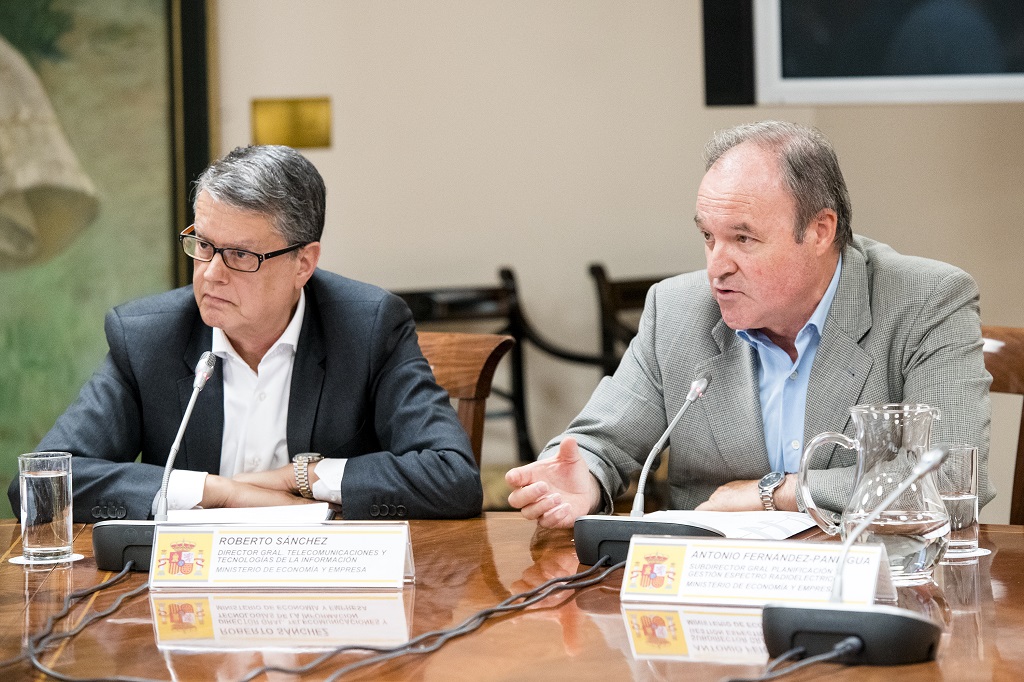
On July 24, the first fires of new digital terrestrial television (DTT) frequencies started in Mallorca, Ibiza and Formentera, as well as in 94 municipalities in the province of Cáceres, and on July 26 in 24 locations in the province of Huelva. Some 36,000 buildings in these areas will have to adapt their collective antenna facilities to continue receiving the full range of DTT channels. They will have a maximum period of six months and will have public aid.
On July 24, the first fires of new digital terrestrial television (DTT) frequencies started in Mallorca, Ibiza and Formentera, as well as in 94 municipalities in the province of Cáceres, and on July 26 in 24 locations in the province of Huelva. Some 36,000 buildings in these areas will have to adapt their collective antenna facilities to continue receiving the full range of DTT channels. They will have a maximum period of six months and will have public aid.
In order to facilitate the transition and minimize the impact for citizens, for a time television channels will broadcast simultaneously over the new and old frequencies (simulcast), before proceeding to the shutdown of the latter.
This was explained this morning by the General Director of Telecommunications and Information Technologies of the Secretary of State for Digital Advancement, Roberto Sánchez, who clarified that the change of frequencies will not affect all buildings in the indicated areas of the Balearic Islands, Cáceres and Huelva. In particular, adaptations must be made to medium- or large-sized community buildings that are equipped with single-channel systems or programmable switchboards. Over the next six months, these neighboring communities – some 36,000, in which 760,000 people live – will need to contact a registered installer to make the necessary changes to the reception systems of your buildings.
Individual homes will be excluded from this adaptation, where only TVs will have to be re-tuned to be able to enjoy the full offer of DTT, once the TVs are finished. simulcast.
This process will not involve the appearance or disappearance of television channels, they simply move out of frequencies. It should also be stressed that this process will not involve the obsolescence of TVs or DTT decoders.
The frequency change of DTT occurs as a result of the release of the so-called Second Digital Dividend, by which the 700 MHz band of radio spectrum, now partially occupied by DTT, will be cleared to allow the deployment of future 5G telecommunications networks.
In compliance with the obligations imposed by the European Union, the 700 MHz band must be fully available by 30 June 2020. This is established by Decision (EU) 2017/899 of the European Parliament and of the Council of 17 May 2017, which aims to ensure a coordinated approach to the use of these frequencies on Community territory. The process will be developed in full coordination with neighbouring countries, not only with those belonging to the European Union, subject to the same process, but also with Morocco and Algeria.
As of June 30, 2020, therefore, the 700 MHz band will be available for the provision of services associated with fifth generation mobile telephony, within the National 5G Plan. This maintains the commitment to place Spain among the leading countries in the development of this technology, which will boost the competitiveness of the business fabric and facilitate the emergence of disruptive innovations.
Next zones
The CEO has advanced that in September will continue with the frequency changes in other areas of Spain such as Albacete, Almería, Badajoz and Santa Cruz de Tenerife. The liberation of the Second Digital Dividend will take place in a staggered manner in most of the national territory, starting with the areas described above. The detail of the municipalities where new emissions will be ignited is specified in the Royal Decree 391/2019, of 21 June.
In total, according to estimates made by the Secretary of State for Digital Advancement, it will affect around 850,000 buildings and 21 million inhabitants. They will be exempt from frequency changes in the multiple national and regional digital networks Asturias, Barcelona, A Coruña, Menorca, Melilla and a part of the provinces of Toledo and Murcia.
Public aid
To minimize the impact of this process on citizenship, the Council of Ministers approved by Royal Decree on June 21 the direct granting of subsidies worth 145 million euros. Today, the Council of Ministers has adopted the agreement authorising this call for aid, which will be managed by the public company Red.es.
The aid will be aimed at compensating the costs arising from the reception or access to television audiovisual communication services in the buildings affected by the Second Digital Dividend. The grant amounts range from €104.3 to €677.95, depending on the infrastructure previously installed.
Citizen information channels
Citizens will be able to consult all their doubts on the website http://www.televisiondigital.es/, and on the telephone 901 20 10 04 and on the toll-free number 954 30 65 01. From August 2, the latter will be replaced by the toll-free hotline 910 889 881.