
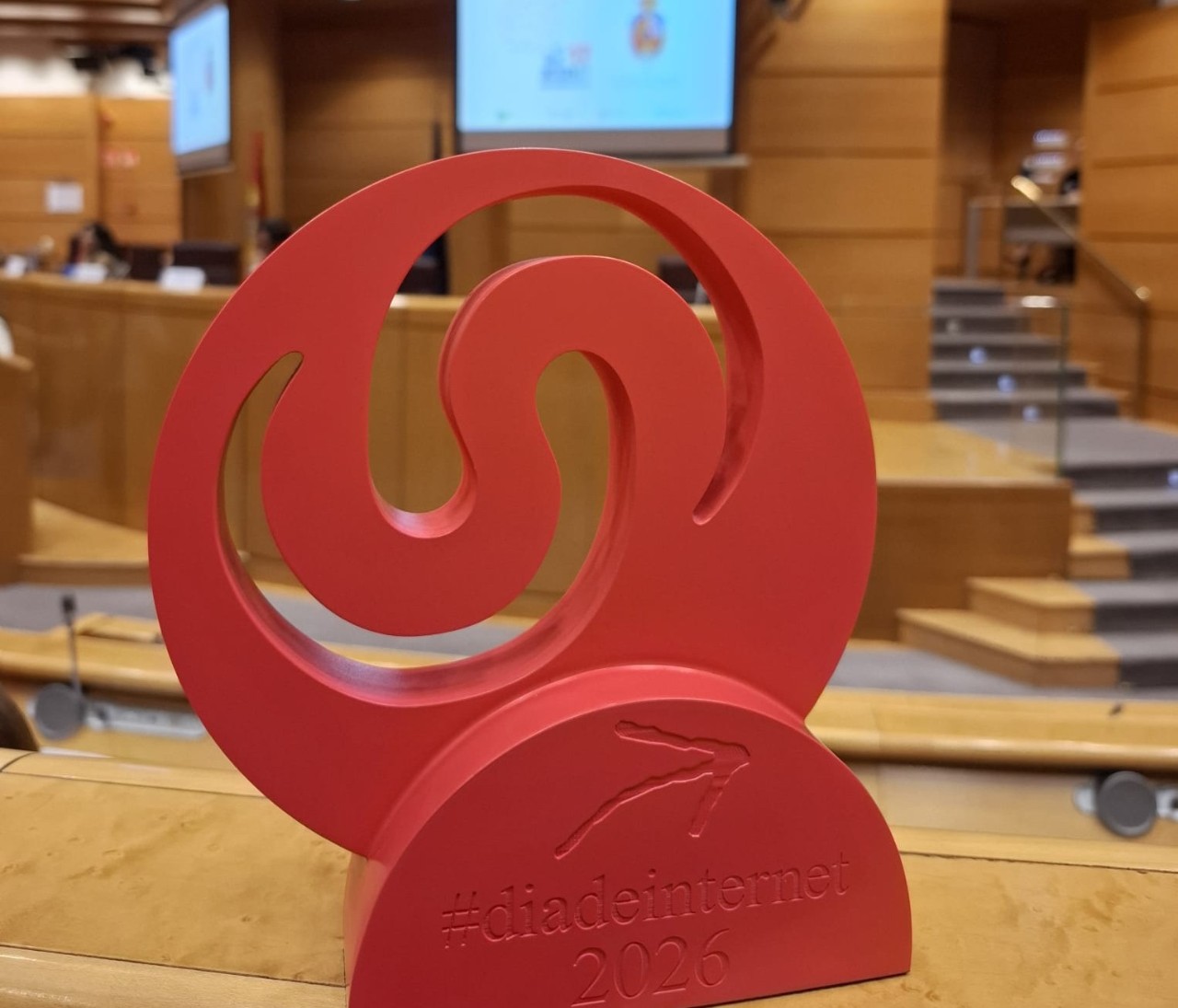
· The recognition highlights the commitment of the Spanish Government to sustainable artificial intelligence and aligned with the objectives of ecological transition and European technological sovereignty
· The PNAV promotes the development of algorithms more energy efficient and with less environmental impact in the field of artificial intelligence
· The Minister for Digital Transformation and Public Service, Óscar López, defended during his telematic intervention in the event, held in the Senate, the need to move towards “a safe and sustainable Internet”
The National Plan of Green Algorithms (PNAV), an initiative promoted by the Secretary of State for Digitalization and Artificial Intelligence of the Ministry for Digital Transformation and Public Service, has been recognized with the Internet Award 2026 in the category of Best Digital Transformation in Public Administrations, within the framework of the celebration of World Internet Day.
These awards, organized by the Association of Internet Users (AUI), have recognized since 1996 people, companies, organizations and initiatives that stand out for the innovative, responsible and socially useful use of the Internet and digital technologies, contributing to economic, social and cultural progress.
The recognition highlights the commitment of the Government of Spain to sustainable artificial intelligence and aligned with the objectives of ecological transition and European technological sovereignty. The PNAV is focused on the development of algorithms capable of maximizing energy efficiency and reducing the environmental impact associated with artificial intelligence models, promoting a more responsible and competitive digital ecosystem.
Since its launch in 2023, the PNAV has promoted the integration of environmental sustainability criteria in the development, deployment and use of artificial intelligence systems. The initiative promotes the incorporation of energy efficiency parameters, environmental impact measurement and responsible use of technological resources throughout the life cycle of algorithmic systems.
Its main lines of action include the development of a technical specification to measure energy consumption, carbon footprint, water consumption and the performance of artificial intelligence systems, as well as specific tools to assess the environmental impact of computational workloads. It also promotes the creation of community and specialized knowledge through hackathons, webinars, guides and other initiatives aimed at developers, researchers and professionals in the digital field.
In addition, in March, guides to good practices in sustainable AI were published, aimed at promoting the use of more sustainable, efficient and responsible artificial intelligence, which collect good practices in data and algorithms, use cases, infrastructures, and methodology. They also include good practices in blockchain and in IT governance for companies and are available in the PNAV website.
The Minister for Digital Transformation and Public Service, Óscar López, has participated telematically in the institutional event, held in the Senate on the occasion of World Internet Day 2026, where he defended the need to promote a sustainable digitalization model in the face of the growth of artificial intelligence and associated technological infrastructures. “It is essential that the development of artificial intelligence is accompanied by a secure and also sustainable Internet,” the minister said during his speech.
The award was presented during the institutional event held in the Senate on the occasion of World Internet Day 2026, this year’s edition of which focused on ‘Sustainability in the Digital Age’. During the day, the need to build a digital ecosystem that is more responsible, inclusive, accessible, safe and respectful of people’s rights has been claimed.
In this 31st edition of the Internet Awards, 271 candidates have been presented and more than 52,000 votes have been registered online, consolidating these recognitions as a reference of the Spanish digital ecosystem.